Best Bagged Compost for Raised Beds: Top Picks for Healthy, Productive Gardens
Choosing the right bagged compost can make a big difference in yield and soil health for raised beds. This guide highlights five bagged options that are well-suited for raised-bed gardening, providing essential nutrients, improved structure, and good drainage. Each product is evaluated on texture, nutrient content, odor, and ease of use to help you compare at a glance and pick what fits your space and goals.
| Product | Brand | Best For |
|---|---|---|
| Charlie’s Compost | Charlie’s Compost | Odor-free soil amendment for beds, seed starting mixes |
| Espoma Organic Raised Bed Mix | Espoma | All-natural mix designed specifically for raised beds |
| Coast of Maine Castine Blend | Coast of Maine | Mycorrhizae, biochar-enhanced drainage and aeration |
| True Organic Raised Bed Food | True Organic | Long-lasting organic nourishment for beds and containers |
| Drhomeam In-Ground Compost Bin | Drhomeam | Space-efficient in-ground composting for raised beds |
These products cover a range of needs—from odor-free and seed-start friendly blends to heavy-duty nutrition and space-saving composting systems. Read on to explore each option, then use the buying guide to prioritize features like texture, nutrient balance, water retention, and compatibility with your existing soil.
Charlie’s Compost Odor Free Organic Fertilizer

Charlie’s Compost is presented as an enriched soil conditioner that acts as a versatile soil amendment for home gardens, raised beds, and seed starting mixes. The formula emphasizes nutrient provision and soil structure improvement, helping plant roots access water and minerals more efficiently. A key feature is its odor-control profile, making it suitable for urban spaces, balconies, and indoor setups where strong compost smells could be an issue. This blend aims to support faster breakdown and microbial activity, promoting a healthier soil ecosystem in raised beds.
For raised-bed gardening, the product’s odor-free claim is attractive for multi-use areas and shared spaces. Its biochar component can contribute to improved water retention and a more stable soil structure, which helps during dry spells. Gardeners prioritizing a cleaner environment without sacrificing soil health may find Charlie’s Compost aligns well with seed starting and container mixes as well as general soil conditioning across seasons.
Espoma Organic Raised Bed Mix

Espoma’s Organic Raised Bed Mix is designed specifically for raised beds and containers. It offers a rich blend of earthworm castings, alfalfa meal, kelp meal, and feather meal, supplemented by the Myco-Tone with endo- and ectomycorrhizae. This combination supports robust root development, nutrient uptake, and improved soil life. The product is marketed as ready to use straight from the bag, reducing the need for additional mixing. Its plant-friendly profile makes it appealing for vegetables, herbs, and ornamental plantings in raised beds.
In practice, this mix helps boost soil biology and provides a balanced nutrient profile that supports steady growth. The presence of mycorrhizae can enhance water uptake and drought resilience, which is valuable for urban gardens or regions with variable rainfall. For gardeners who want a dependable, organic, all-in-one raised bed solution, Espoma’s mix represents a straightforward, low-guess option.
Coast of Maine Castine Blend Soil
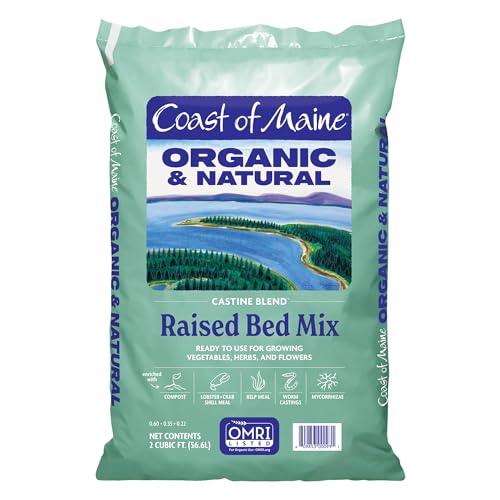
The Castine Blend from Coast of Maine emphasizes advanced nutrient delivery through a premium mix of worm castings, mycorrhizae, biochar, and sea-derived components like kelp meal. This blend targets improved drainage and aeration in raised beds, supporting robust root growth and healthier vegetable and herb crops. The table-ready formulation means you can use it directly in beds and containers without extra amendments. The product’s biochar component can contribute to long-term soil carbon and moisture retention, helping plants cope with heat and drought periods.
Gardeners seeking enhanced soil structure and microbial diversity will appreciate the combination of organic matter and mineral inputs. The ready-to-use nature minimizes prep time, while the inclusion of biochar and mycorrhizae supports ongoing soil health. For beds that require better drainage and soil life, Castine Blend offers a practical all-in-one option.
True Organic Raised Bed Food

True Organic Raised Bed Food is positioned as an organic fertilizer designed for raised beds, herbs, flowers, vegetables, and fruits. The formula features seabird guano, shrimp and crab shell meals, and other organic components intended to nourish soil and promote sustained plant growth. The product emphasizes a long-lasting feeding schedule, supporting two-month intervals during the growing season. This approach helps maintain consistent nutrient availability and avoids spikes that can stress plants.
For gardeners who prefer a straightforward, easy-to-use feed that aligns with organic gardening principles, this product offers predictable nourishment without synthetic inputs. The combination of natural nutrient sources can contribute to soil health over time, especially in beds that need regular feeding with minimal mixing. It is well-suited for established raised beds where steady, controlled nutrition is desired.
Drhomeam In-Ground Compost Bin

The Drhomeam option is an in-ground compost bin designed to fit small garden spaces and raised beds. The compact dimensions (about 11 by 4.3 by 4.3 inches) make it a space-saving choice for urban gardeners who want to produce finished compost close to the beds. The PVC construction is designed for durability in outdoor conditions, with a secure, vented lid for airflow and moisture containment. This system promotes a steady flow of nutrient-rich compost from kitchen waste to the garden bed, reducing the need to transport compost from distant sources.
In practice, the in-ground approach minimizes visual footprint while delivering recycled organic matter to the soil. For gardeners who struggle with space or prefer on-site composting, the Drhomeam unit provides a practical, low-maintenance solution to generate usable material that can be mixed into raised beds as needed. The product emphasizes stability and airflow to speed decomposition in a compact form factor.
Buying Guide: Key Considerations For Bagged Compost In Raised Beds
Choosing the right compost for raised beds involves balancing texture, nutrient content, water management, and ease of use. Consider these factors to tailor options to your garden:
- Texture and mulch integration: A crumbly, well-mixed texture blends easily with existing soil and improves aeration and drainage in raised beds. Avoid heavy, compacted blends that can smother roots.
- Nutrient balance: Look for blends with balanced nitrogen, phosphorus, and potassium, plus micronutrients. Organic amendments such as worm castings, seaweed meal, and mycorrhizae support long-term soil health.
- Soil life boosters: Mycorrhizal fungi, biochar, and compost microbes enhance nutrient uptake and moisture retention, especially in raised beds with limited soil volume.
- Moisture management: Raised beds dry out faster than in-ground beds. Choose compost with water-retaining components or add coconut coir or peat-free blends to improve consistency.
- Odor and usability: For urban or balcony gardens, odor-free options and ready-to-use blends reduce setup time and living area concerns.
- Compatibility with seed starting: For seed starting in beds or containers, blends that work well in seed mixes can be helpful for consistency from germination to transplant.
- Space constraints: If space is tight, consider in-ground composting options or compact bags that are easier to handle and store.
- Longevity and feeding schedule: Some products offer longer-lasting nutrition with fewer reapplications, while others emphasize quick nutrient release for rapid growth.
When evaluating options, compare how each product aligns with your climate, bed design, and crop plans. For example, a biochar-rich mix may excel in hot, dry regions by improving water retention, while a mycorrhizal-enhanced blend can boost nutrient uptake in nutrient-poor soils.