Best Black Eyed Susan Wildflower Guide for Pollinator Gardens and Borders
Black-eyed Susan wildflowers (Rudbeckia hirta) brighten sunny beds, borders, and wildflower meadows with bold yellow blooms and dark centers. This guide highlights five top seed options, detailing germination, growth, and ecological benefits. Explore choices that suit direct sowing, container gardening, or naturalized landscapes while supporting pollinators across American gardens.
Summary Of Selected Products
| Product | Brand | Seed Type | Key Benefit |
|---|---|---|---|
| KVITER 10,000 Black Eyed Susan Seeds | KVITER | Heirloom, Non-GMO, Organic | Large quantity; versatile sowing options; drought-tolerant |
| Black-Eyed Susan Wildflower Seeds – 1 Packet | SURVIVAL GARDEN SEEDS | Non-GMO, Heirloom | Pollinator-friendly; drought-tolerant; supports ecosystems |
| Created By Nature Black-Eyed Susan Seeds | Created By Nature | Non-GMO | High germination; wide coverage per packet |
| Extra Large Packet Black Eyed Susan Seeds | SWEET YARDS | Open-pollinated, Non-GMO | Very large quantity; covers expansive areas |
| Everwilde Farms Indian Summer Black-Eyed Susan Seeds | Everwilde Farms | Native wildflower seeds | Gold vault packaging; long-term storage |
KVITER 10,000 Black Eyed Susan Seeds
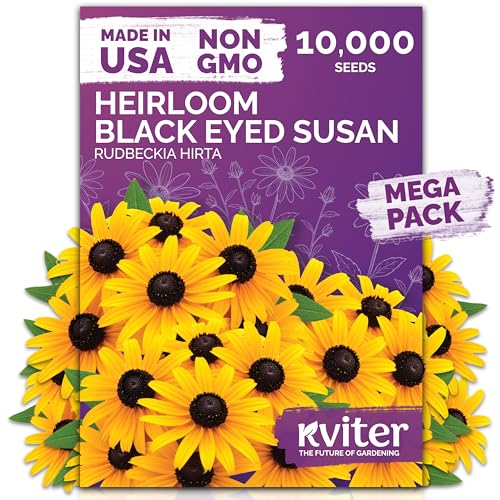
KVITER offers a high-value seed packet with 10,000 black-eyed Susan seeds suitable for beds, borders, containers, or meadows. The seeds are described as he irloom, non-GMO, and organic, aligning with organic or sustainable garden goals. Sowing options include direct fall sowing, spring-stratified germination, or indoor starting six to eight weeks early. Light-requiring surface-sowing fits sunny sites with well-drained soil. Plants typically reach about 24 inches in height and tolerate clay or rocky soils, thriving in full sun with heat and drought resilience.
Germination and growth notes emphasize versatility: plant timing can vary by climate, with direct sowing in mild fall or spring preparation through stratification or indoor start. The tall, vibrant yellow daisies attract pollinators and provide a long bloom window in summer through early fall. This product suits gardeners seeking large-volume plantings for vibrant mass displays or pollinator corridors.
Black-Eyed Susan Wildflower Seeds – 1 Packet

SURVIVAL GARDEN SEEDS presents a single-packet option described as resilient and low maintenance. The variety is suitable for diverse terrains—from forests to open fields—and features drought tolerance and deer resistance. It supports healthy ecosystems by attracting pollinators such as bees and butterflies. The bloom period typically extends from summer into fall, making it a reliable choice for continuous color. With a grown native appeal, these seeds help stabilize soil and reduce erosion in sun-soaked landscapes.
The listing highlights sustainability and ease of care, appealing to busy or new gardeners seeking dependable results. It pairs well with wildflower mixes or as a standout border plant to draw pollinators into the garden. The emphasis on native appeal and ecosystem support aligns with environmentally conscious landscaping goals.
Created By Nature Black-Eyed Susan Seeds

Created By Nature offers 55,000 non-GMO yellow daisy seeds per packet, designed to cover up to 200 square feet. The seeds are described as easy to grow and suitable for borders, beds, or naturalized meadows. Germination is typically robust, with germination timelines that place blooming around 60–90 days after planting, depending on conditions. The seeds are sourced in the USA, supporting local agricultural practices and quality control for gardeners seeking reliable results in sunny to partially shaded areas.
These seeds are ideal for large-scale planting or educational projects, where rapid, bright color is desired. The non-GMO status and USA sourcing may appeal to gardeners prioritizing domestic production and open-pollinated varieties that can cross-pollinate naturally with local flora.
Black Eyed Susan Seeds – Extra Large Packet

SWEET YARDS offers an extra large packet with over 100,000 open-pollinated, non-GMO seeds, enough to cover approximately 600 square feet. The listing emphasizes fresh seeds for high germination rates and easy gardening. Premium packaging includes full planting instructions and a reusable zipper bag, making storage and gifting straightforward. This option is well-suited for expansive borders, large wildflower meadows, or community garden plots that require substantial seed volumes for quick coverage.
Prospective buyers should note the scale of this packet—the quantity is ideal for large projects, seed swaps, or landscape contracts. The open-pollinated nature supports natural genetic diversity, which can be beneficial for long-term adaptability in variable climates across American regions.
Everwilde Farms Indian Summer Black-Eyed Susan Seeds

Everwilde Farms markets 100 Indian Summer Black-Eyed Susan native wildflower seeds with Gold Vault packaging designed for longer storage. The packaging is described as triple-layer Mylar gold foil, providing storage stability and extended shelf life. The resealable bag is reusable, facilitating future sowings or seed saving. As a native wildflower option, this seed mix can support regional pollinators while aligning with conservation-minded gardening practices. This choice is suited for gardeners aiming to cultivate native landscapes with durable seed longevity.
In addition to aesthetic appeal, the native status of these seeds may encourage ecological compatibility with local soil types and climate patterns. The storage focus is especially helpful for gardeners who collect seeds seasonally or maintain seed libraries for future plantings.
Buying Guide: Key Purchase Considerations For Black-Eyed Susan Seeds
- Germination And Viability: Look for Non-GMO and open-pollinated seeds to ensure reliable germination and natural offspring. Packaging that mentions high germination rates often indicates fresh, viable seed stock.
- Size Of Seed Packets: Choose packet quantities that fit your project scope. Large packets suit expansive borders or community plots; single packets are suitable for small beds or container plantings.
- Growing Conditions: Black-eyed Susans prefer full sun and well-drained soil. While they tolerate poor soils, improved drainage and sun exposure typically yield more robust blooms and healthier plants.
- Water And Drought Tolerance: Many varieties are drought-tolerant once established. Consider regional rainfall patterns and irrigation plans to minimize water use while maximizing bloom potential.
- Ecological Impact: Native and pollinator-friendly selections support bees, butterflies, and other beneficial insects. Native or regionally adapted options may offer better long-term compatibility with local ecosystems.
- Storage And Longevity: If you purchase seeds with specialty packaging (such as Gold Vault or resealable bags), consider how you will store excess seeds to preserve viability for future seasons.
- Planting Timeline: Fall sowing can work in milder climates, while spring sowing may require stratification or indoor starting. Review any specific germination guidance provided on the packet for best results.
- Aesthetic And Garden Design: Consider bloom size, plant height, and color intensity to design effective borders, pollinator corridors, or meadow-style plantings that complement other wildflowers.
Black-eyed Susan wildflowers provide a versatile option for American gardens, combining bright, long-lasting color with ecological benefits. By selecting seeds that align with your climate, maintenance tolerance, and conservation goals, you can establish resilient plantings that brighten landscapes while supporting pollinators.