Best Durable Raised Garden Beds for Year-Round Growing
Durable raised garden beds offer reliable soil depth, strong construction, and long-lasting performance for vegetables, herbs, and flowers. This guide highlights five high-quality options and compares key features to help American gardeners choose beds that can withstand weather, resist rust, and support healthy root development. Each product section links to Amazon for detailed specs and purchase options.
| Product | Size / Capacity | Material |
|---|---|---|
| Best Choice Products 8x4x2ft Outdoor Metal Raised Garden Bed | 8x4x2 ft, 478 gal | Steel |
| Best Choice Products 4x2x2ft Outdoor Metal Raised Garden Bed | 4x2x2 ft, 119 gal | Steel |
| Best Choice Products 48 x 24 x 30 Inches Raised Garden Bed | 48x24x30 in, 5 CuFt bed space | Wood (Chinese fir) |
| Best Choice Products 72x24x30in Raised Garden Bed | 72x24x30 in, 8.4 CuFt | Wood (Chinese fir) |
| Land Guard 8×4×2 ft Galvanized Raised Garden Bed Kit | 8x4x2 ft | Galvanized steel |
Choosing a durable raised bed involves balancing material strength, soil depth, and maintenance needs. The options below cover metal and wood designs, as well as galvanized steel, to accommodate different climates, plant types, and space constraints. Read on to explore each product’s standout traits and how they fit common American gardening scenarios.
Best Choice 8x4x2ft Metal Raised Bed: Deep Root Planter
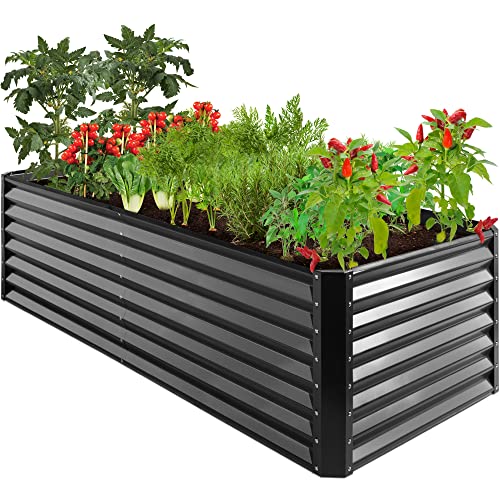
This large, open-bottom metal bed emphasizes deep soil capacity for robust root systems. With 24 inches of growing depth, it can hold up to 478 gallons of soil, supporting vegetables like broccoli and beans. The open base promotes compost layering and rich soil creation by allowing yard waste to mix with kitchen scraps and amendments. The panels assemble tool-free using wingnuts and bolts, with rubber edging to protect plant stems and reduce abrasion. It is ideal for dedicated vegetable plots or ornamental beds where drainage and soil enrichment are priorities.
Best Choice 4x2x2ft Metal Raised Bed: Compact Deep Planter

This 4×2-foot metal raised bed provides a substantial 24-inch depth for medium to deep-rooted crops, while a bottom-free design promotes drainage and aeration. The open-base configuration supports rapid water drainage and easier nutrient access for plant roots. Assembly is tool-free, with beveled steel panels connected by wingnuts and bolts and protected by rubber edging. Its compact footprint makes it a strong choice for smaller backyards, patios, or balcony setups where maximizing soil volume in a limited area matters.
Best Choice 48x24x30 Inches Raised Garden Bed: Elevated Wood Bed

This bed uses all-wood construction with durable Chinese fir to create a weather-resistant frame suitable for outdoor use. The 5 CuFt planting space provides ample room for a variety of vegetables, herbs, and flowers. Proper drainage helps prevent waterlogging and mineral buildup, while the natural wood finish blends with most outdoor aesthetics. This option is well-suited for gardeners seeking a traditional timber look without sacrificing drainage efficiency or soil health over time.
Best Choice 72x24x30in Raised Garden Bed: Large Wooden Planter

This larger wooden bed provides expansive planting space—8.4 cubic feet of volume—ideal for a broad range of plant types. Six drainage holes support root aeration and efficient water escape, reducing the risk of rot or mineral buildup. The all-wood construction from Chinese fir offers a sturdy, weather-friendly structure designed to resist warping and sagging over time. It suits backyard plots, patios, or decks where a generous, accessible bed is beneficial, particularly for families growing multiple crops.
Land Guard 8×4×2 ft Galvanized Raised Bed Kit

Constructed from galvanized steel, this 8×4×2 ft kit emphasizes rust resistance and durability in varied climates. Its galvanized panels resist weathering and provide a strong, stable growing container for vegetables and flowers. The design emphasizes structural integrity with reinforced crossbars and fixed piles to minimize warping and soil leakage. Environmentally friendly paint preserves soil health and aligns with sustainable gardening practices. This bed is well-suited for long-term outdoor use in regions with heavier precipitation or salty air, such as coastal areas.
Buying Guide: Key Purchase Considerations
Material and durability are central to choosing a raised bed that lasts. Metal and galvanized steel beds offer longevity and strong resistance to weather, while wood beds provide a natural aesthetic and comfortable temperature for roots. Consider the climate: galvanized or powder-coated metal works well in heat and moisture, while treated wood should be rated for outdoor use to avoid rot.
Depth and soil capacity affect what you can grow. Deeper beds support crops with deep roots, such as broccoli, carrots, and beans, while shallower beds are suitable for leafy greens and herbs. Open-bottom designs can enhance drainage and soil enrichment, but verify whether you require bottom panels for protection against soil leakage or for certain crop types.
Drainage is critical. Beds with multiple drainage holes or open bases help keep roots oxygenated and prevent salt buildup. The presence of a bed liner or liner options can extend wood durability by reducing direct soil contact with wood seams and potential chemical leaching.
Assembly and maintenance matter for busy homeowners. Tool-free assembly or minimal hardware reduces setup time. For metal beds, look for protective edging to shield plant stems during installation. For wood beds, consider a finish that resists moisture and warping over years of exposure to sun and rain.
Size and layout influence garden design. Large beds support diverse crops, while modular designs offer flexibility to customize shape and spacing. Consider available space, access for maintenance, and whether you prefer a raised bed with a stand or one that sits directly on the ground. Accessibility features, such as comfortable height and easy reach, improve long-term usability for gardeners of all ages.
Budget and aesthetics are practical factors. Wood beds tend to be more affordable upfront and provide a classic look, while metal and galvanized options emphasize durability and a modern appearance. Evaluate the long-term cost of maintenance, soil replacement, and potential replacements due to wear and rust when comparing options.
Environment and soil health: Open-bottom or open-base designs can facilitate natural soil formation and nutrient cycling. If you rely on in-situ composting or soil enrichment, an open-base bed may be advantageous. However, if you need precise soil containment and minimal root leakage, a solid bottom or reinforced panels may be preferable.