Best Gravel for Shed Base: Durable Permeable Paver Grids for Foundations
Choosing the right gravel base for a shed requires durable, permeable support that resists erosion while allowing drainage. The following selections are ideal for forming a solid shed foundation, driveways, or gravel patios. Each option is designed to distribute loads, reduce rutting, and simplify installation. Below is a quick comparison of five standout products to help you compare options at a glance.
| Product | Brand | Best For | Approx. Load Capacity | Notes |
|---|---|---|---|---|
| TRUEGRID PRO LITE Permeable Pavers | TRUEGRID | Gravel sheds and patios | High load class (pack of 18) | Lightweight, made in USA, highly permeable |
| Goldshire Permeable Pavers | Goldshire | Grass and gravel driveways | Up to 6,610 lbs per grid (varies by base) | 100% recycled plastic, strong interlock |
| VEVOR Ground Grid | VEVOR | DIY patios, walkways, shed bases | 1885 lbs per sq ft (cell-filled) | 3″ depth, modular HDPE cells |
| BaseCore HD Geocell Grid | Performance Footing | Driveways, sheds, pathways | High tensile strength, strong support | Includes BaseClips/BaseCaps for stability |
| 4″ Thick Geo Ground Grid (Kerty) | Kerty | Driveways, shed bases, slopes | Up to 1885 lbs per sq ft | Heavy-duty, modular, easy to fold |
TRUEGRID PRO LITE Permeable Pavers
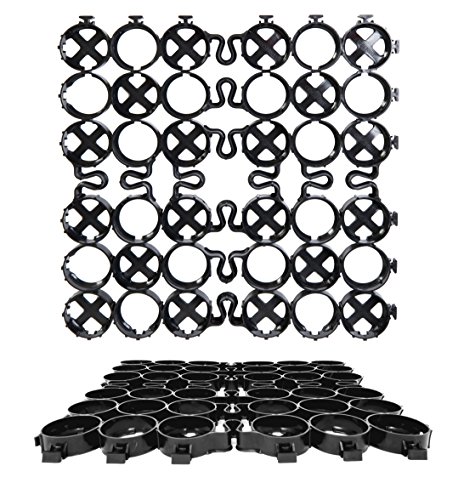
TRUEGRID PRO PLUS paver grids are designed for easy DIY installation and are suitable for driveways, grass shed bases, patios, and RV pads. They are made in the USA from 100% post-consumer recycled HDPE and are fully permeable, enabling immediate drainage. The pavers are snow plow-ready and perform in all weather conditions, making them a versatile choice for shed foundations in varying climates.
Goldshire Permeable Pavers Gravel System

Goldshire’s 12-unit system provides interlocked gravel grids ideal for shed bases, driveways, and grass patios. Each unit is 1.6 inches deep and covers 32 square feet. The 100% recycled plastic construction offers strong load support, with a claimed capacity around 6,610 lbs per unit depending on the base and fill. The versatile grid system supports multiple configurations for landscaping and construction projects.
VEVOR Ground Grid

VEVOR offers a 3-inch-deep ground grid system rated for high load transfer and erosion control. The kit includes a large coverage area (237.5 sq ft) with single-cell stabilization, enabling immediate vehicle or foot traffic while preventing gravel migration. Its HDPE construction is designed for longevity and climate resilience, with cuttable panels to tailor installation to irregular shapes.
BaseCore HD Geocell Ground Grid

BaseCore HD Geocell Grid emphasizes higher tensile strength and stability for gravel driveways, sheds, walkways, and erosion control. The system is designed for heavy-duty support and longevity, with BaseClips and BaseCaps to secure and protect joints, especially on slopes where erosion risk is higher. It is suitable for projects requiring robust, long-lasting gravel foundations.
4″ Thick Geo Ground Grid (Kerty)

This 4-inch-thick geo grid from Kerty provides deep-grid stabilization ideal for driveways, sheds, and slopes. The modular, foldable design allows for easy storage and flexible installation. Made from durable HDPE, it resists deformation and weathering while offering a high load-bearing capacity, suitable for heavy vehicles on shed bases and parking areas.
Buying Guide: Key Considerations for Gravel Shed Bases
- Load capacity and distribution: Choose grids that distribute weight evenly to prevent rutting and base failure. Higher load ratings are beneficial for heavier equipment or frequent traffic.
- Permeability and drainage: Permeable grids reduce erosion and standing water. Ensure the product permits quick drainage to protect the shed foundation.
- Material and durability: HDPE is common for longevity and weather resistance. Check UV stability and recyclability for environmental impact.
- Ease of installation: Look for modular panels, interlocking systems, and accessory kits (clips, caps, gloves, staples) that simplify setup and reduce labor.
- Ease of maintenance and adaptability: Consider grids that can be cut to fit irregular shapes and that work with various fill materials (gravel, soil, or sand).
- Climate and site conditions: For sloped or unstable ground, select deeper grids with robust connection systems to minimize movement and erosion.
- Project scope and scalability: If you anticipate future expansions, choose systems that can be extended or reconfigured without replacing existing grids.