Best Herbicide for Creeping Charlie: Effective Options for Home Lawns
Creeping Charlie (Glechoma hederacea) can be stubborn in turf, requiring selective broadleaf weed controls that target its growth without harming grass. The following selections are among the most relevant herbicides for residential and commercial lawns, golf courses, and other turf areas prone to creeping Charlie. Each product focuses on broadleaf weed control with formulations designed for various grasses and settings. Read on to compare active ingredients, application ranges, and suitability for your turf needs.
Summary of chosen products:
- Albaugh Sublime Weed Killer — Broad spectrum, non-bleaching, versatile for lawns and institutional sites
- Hi-Yield Triclopyr Ester — Effective on creeping Charlie and Wild Violet, suitable for ornamentals and turf
- Southern Ag Amine 2,4-D — Economical broadleaf weed control for turf, pastures, and related areas
- TZONE SE Broadleaf Herbicide for Tough Weeds — Multi-ingredient mix targeting tough broadleaf weeds
- PBI / Gordon TZone SE Broadleaf Herbicide — Focused on wild violet, ground ivy, and other tough weeds
Albaugh Sublime Weed Killer

Albaugh Sublime Weed Killer provides broad spectrum weed defense without bleaching effects, making it a practical choice for lawns, golf courses, parks, and other turf areas. The product emphasizes control of persistent weeds such as crabgrass, creeping Charlie, dandelions, and other common broadleaf species, while preserving turf aesthetics. It is designed for diverse landscape use, including ornamental turf and sod farms, and is aimed at both residential and institutional settings. The formula targets a wide range of weeds, reducing the likelihood of regrowth within treated areas.
Hi-Yield Triclopyr Ester

Hi-Yield Triclopyr Ester targets actively growing broadleaf weeds, including creeping Charlie and Wild Violet. This 8-ounce bottle is a versatile concentrate suitable for use on perennial cool-season grasses like bluegrass, ryegrass, and tall fescue. It is also used as a bluegrass suppressor in some applications. The ester formulation enhances uptake and effectiveness on broadleaf species, making it a practical option for turf, ornamental landscapes, and mixed grassy areas where creeping Charlie is a concern.
Southern Ag Amine 2,4-D Weed Killer
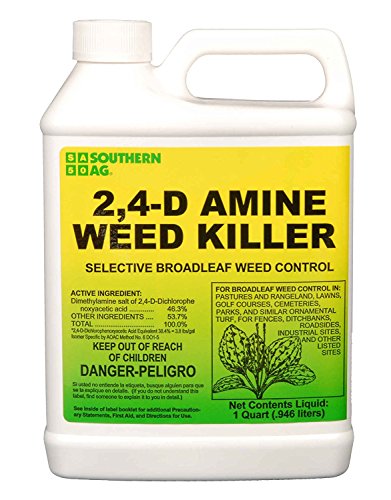
Southern Ag Amine 2,4-D Weed Killer provides a low-cost option for broadleaf weed control in turf, pastures, rangeland, and other outdoor spaces. With a low to moderate use rate, it is suitable for treating a variety of broadleaf weeds, including creeping Charlie, oxalis, and wild violets. It is designed for turf and landscape applications, as well as ditch banks and fence lines, offering flexible use across different turf management scenarios. The product supports economical upkeep of lawns and related turf areas affected by undesirable broadleaf species.
TZONE SE Broadleaf Herbicide for Tough Weeds
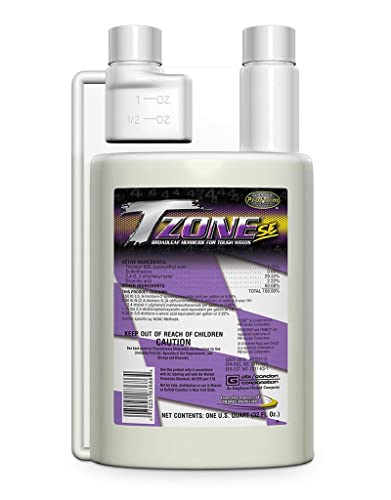
TZONE SE Broadleaf Herbicide combines triclopyr, 2,4-D, dicamba, and sulfentrazone to target tough broadleaf weeds, including creeping Charlie. It is designed for residential, commercial, and golf site applications, with a focus on broadleaf weed suppression and yellow nutsedge management. This multi-ingredient formulation helps tackle stubborn species in various turf environments while aiming to minimize unintended grass damage when used as directed.
PBI / Gordon TZone SE Broadleaf Herbicide

The PBI / Gordon TZone SE Broadleaf Herbicide focuses on common tough weeds such as wild violet and ground ivy, offering a targeted solution for residential and commercial lawns. The product is designed for use in turf environments where creeping Charlie and other broadleaf weeds are problematic, and is positioned for reliable control across lawns, golf courses, and similar turf facilities. It emphasizes practical usability and compatibility with typical lawn care programs.
Triclopyr 4 EC Compare to Garlon 4 and Remedy

Triclopyr 4 EC (Alligare) is a high-concentration formulation designed to control brush, trees, and tough broadleaf weeds in pastures, rangelands, and turf settings. It can be mixed with a penetrant oil to improve uptake. While primarily aimed at woody species, it is often used in turf programs where creeping Charlie coexists with woody or aggressive broadleaf competitors. This option is suitable for more robust weed control plans that require versatility across multiple site types.
Buying Guide: Key Purchase Considerations
- Active ingredients and weed spectrum — Creeping Charlie responds to several chemistries, with triclopyr and 2,4-D being common effective components. Consider a product with a proven track record against creeping Charlie and similar broadleaf weeds.
- Grass tolerance and site suitability — Verify compatibility with your grass type (cool-season vs warm-season) and site (lawn, golf course, park). Some formulations are gentler on fine fescues or Kentucky bluegrass, while others are more aggressive and may require careful tank-mix and application timing.
- Application timing and conditions — Most broadleaf herbicides are applied during active weed growth in moderate temperatures. Avoid drought stress periods and high heat, which can reduce effectiveness or increase turf injury risk.
- Formulation and rate flexibility — Liquid concentrates, ready-to-use mixes, and single-use bottles vary in coverage and dilution needs. Match the product’s label directions with your target area size and weed pressure.
- Safety and environmental considerations — Follow label directions for proper handling, storage, and disposal. Look for products with targeted action to minimize impact on non-target grasses and beneficial organisms.
- Reuse and compatibility — Some products pair well with pre-emergents, fertilizer programs, or other weed-control products in a lawn care regimen. Check for compatibility notes to prevent antagonistic effects or oversprays.
- Cost and coverage — Compare coverage per bottle or per acre to estimate cost per treated area. While price matters, effective weed control and turf safety should guide the buying decision.
- Regulatory and retailer considerations — Ensure the product is permitted in your area and sourced from reputable retailers. Use approved channels and follow local guidelines for pesticide use.