Best Herbicide for Food Plots: Top Picks to Protect Your Forage Plots
Food plots rely on carefully managed plantings to attract wildlife and sustain nutrition. Selecting the right herbicides and complementary products helps maximize forage while keeping desirable plants safe. This guide highlights five products tied to food-plot management, including two selective grass and broadleaf herbicides designed specifically for deer plots, plus seed options to improve soil health and plant establishment. Use the buying guide at the end to compare options and plan your plot for multiple seasons.
| Product | Brand | Core Use |
|---|---|---|
| Arrest Max Selective Grass Control Herbicide | Whitetail Institute | Selective grass control in food plots |
| Slay Selective Broad-Leaf Weed Control | Whitetail Institute | Broadleaf weed control in food plots |
| Winter Wheat Food Plot Seed | Hale Habitat & Seed | Winter forage seed for food plots |
| Perennial White Dutch Clover Seed | Outsidepride | Ground cover, erosion control, and forage |
| Non-Typical Clover Deer Food Plot Seed | Biologic | Fast-establishing white clover for forage |
Arrest Max Selective Grass Control Herbicide
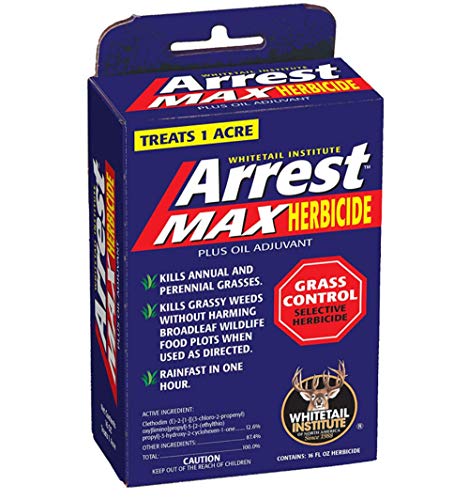
Arrest Max is designed specifically for deer food plots and targets grasses while preserving forages. The product is noted for controlling a broad range of both annual and perennial grasses, helping to protect clovers, alfalfa, and other preferred forage. For land managers, this selective grass control supports maintaining a diverse forage mix without sacrificing key forage crops used in food plots.
The herbicide fits into a plot rotation where grass suppression is needed during feeder-planted windows. Its selective profile minimizes risk to clover and alfalfa stand establishment, enabling long-term stand persistence in combination with Whitetail Institute forages. Field staff typically apply when grasses are actively growing, aligning with standard weed-control cycles for warm-season plots or transitional stands.
Slay Selective Broad-Leaf Weed Control
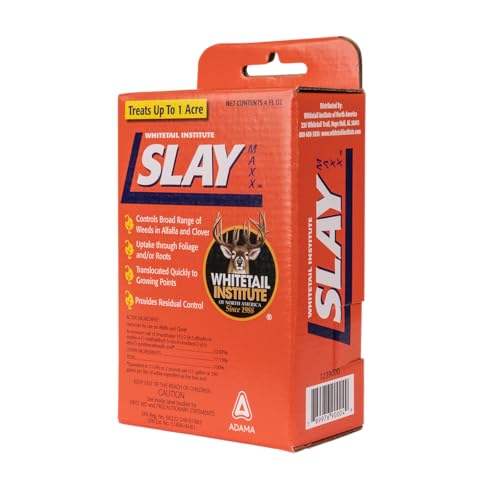
Slay is another Whitetail Institute product formulated for food plots, focusing on selective broadleaf weed control. It’s designed to be used in deer plots to reduce competition from broadleaf weeds during early growth stages. Applicability includes spring or early summer spraying, coinciding with the emergence of broadleaf weeds and the initial phases of forage growth. It’s also noted for compatibility with equipment like four-wheelers or tractor sprayers, facilitating efficient, field-wide applications.
Targeting broadleaf weeds helps ensure that clover, alfalfa, and other preferred forage receive sufficient sunlight and nutrients. The product’s specificity supports a balanced forage mix, making it easier to sustain high-protein, high-energy feed in the plot across seasons. As with any herbicide, follow label directions for timing, rates, and safety precautions to protect non-target plants and wildlife.
Winter Wheat Food Plot Seed

Winter wheat is a fall-planted forage option that can provide early-season forage for deer and other wildlife. This seed is described as certified for maximum growth and attractant value, offering a reliable stand when established properly. A typical bag provides enough seed to cover a portion of a plot, enabling managers to extend forage availability into the late fall and early winter when other forage options may wane in density or nutritional value.
Seed quality and germination rates influence early establishment, making good soil preparation and proper sowing depth important steps. Winter wheat complements other cover crops and can pair with clover or brassica-based mixes to diversify nutrition and attractant sources across the hunting season.
Perennial White Dutch Clover Seed

White Dutch clover is a versatile ground cover and forage component that can support erosion control and soil health while serving as a nutritious option for wildlife. The seed is treated with nitro coating and inoculation to promote germination and robust soil interaction, aligning with broader plot management goals. Its adaptability to USDA zones 3-10 makes it suitable for a wide range of American landscapes, from cool northern plots to warmer southern settings.
In food plots, white clover can act as a long-term forage partner with grasses and other forages, contributing to a balanced protein profile and providing habitat structure for wildlife. Proper establishment, including soil preparation and moisture management, boosts stand persistence across seasons.
Non-Typical Clover Deer Food Plot Seed

Biologic’s non-typical clover is a large-leaf white clover variety marketed for fast establishment and aggressive growth. The seed mix emphasizes rapid stand development, heavy foliage, and long-term persistence, providing a stable forage base for deer-turkey mix. Nutritional content is highlighted, with substantial digestible nutrients and crude protein, supporting sustained wildlife nutrition across the year. It is designed to grow across various soil types, given adequate moisture, and can perform well in diverse climate zones.
PowerPlant Deer Food Plot Seed

PowerPlant is a spring-planted seed mix designed for high-protein tonnage during peak forage periods. It emphasizes vining forage soybean and peas to deliver robust protein and biomass, supporting high-energy forage during key deer life stages, including antler growth, fawning, and lactation. The seed blend aims to provide rapid establishment and strong growth that can endure heavy grazing while maintaining yield across multiple grazing cycles.
Monster Mix Turkey And Deer Seed

Tecomate Monster Mix combines premium clover and chicory with other high-protein seeds to create a versatile food-plot mix. Marketed as an ultimate do-it-all seed blend, Monster Mix aims to provide year-round nutrition and attraction, with a focus on perennial coverage and resilience to heavy grazing. This mix is designed to establish quickly and endure in diverse soil conditions, making it a practical option for managers seeking long-term plot productivity.
HIT LIST SEED Vivant Forage Turnip
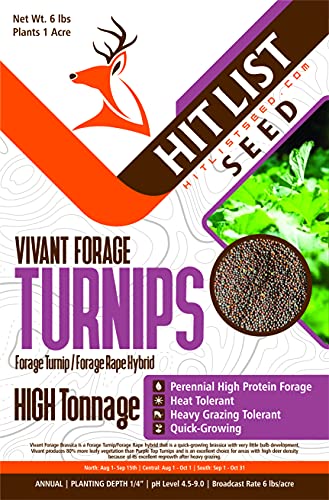
Vivant forage turnip seeds provide fast-growing brassica forage with high protein content, making them a strong fall option for deer food plots. This annual mix is suitable for no-till applications and aims to deliver rapid growth for late-season forage and hunting-season attractants. Turnips can supplement other forage crops by supplying high-nutrient forage when other plants begin to slow down in cooler months.
Buying Guide: Key Purchase Considerations and Comparisons
When selecting products for weed management in food plots, consider the following factors to make informed choices and optimize results across growing seasons.
- Targeted weeds and forage crops: Use selective herbicides like Arrest Max and Slay to control grasses and broadleaf weeds without harming clover or alfalfa stands. Match weed pressures with the product’s labeled use for best results.
- Growth stage timing: Apply weed-control products during weed emergence or early growth windows as labeled. For seed purchases, align sowing with local climate windows to maximize germination and establishment.
- Plot layout and equipment: Consider equipment capability (four-wheeler or tractor sprayer) for even application. Larger plots may require equipment that can cover ground efficiently without compromising target accuracy.
- Soil health and cover: Seed selections like white Dutch clover and perennial clover improve soil nitrogen and erosion control. Nitro-coated and inoculated seeds tend to germinate more reliably, especially in challenging soils.
- Seasonal nutrition: Forage seeds such as winter wheat, sunflower-like blends, and clover mixes provide nutritional variety throughout the year. Plan rotations to ensure consistent forage availability during hunting seasons.
- Regulatory and safety considerations: Always follow label directions for all herbicides, including re-entry intervals, wildlife safety, and buffer zones near water sources. Safety data sheets and local extension resources can provide region-specific guidance.
- Long-term plot health: Choose seed blends with disease resistance and stress tolerance for your region. A diversified blend helps spread risk and maintain forage availability across climate fluctuations.
- Cost and value: Balance upfront seed costs with expected stand longevity and forage production. Durable, long-lasting seeds may reduce the need for frequent reseeding, saving time and labor over multiple seasons.
Across herbicides and seed mixes, the key is aligning product choices with your climate, plot size, soil health, and wildlife goals. A coordinated plan that incorporates both weed management and forage diversity can yield consistently productive food plots that sustain wildlife populations year-round.