Best Ivy Weed Killers for Home Gardens and Lawns
Choosing the right herbicide for ivy and related brush can protect lawns, flowerbeds, and landscapes from invasive growth. This guide reviews five top-rated products, highlighting active ingredients, safety features, and practical usage tips for American homeowners. Each product is evaluated on effectiveness, timing flexibility, and safety for pets and families.
| Product | Brand | Active Traits | Best For |
|---|---|---|---|
| Pro Brush & Poison Ivy Killer – 32oz | Liquid Harvest | Triclopyr, 2,4-D; post-emergent; broadleaf and woody weeds | Thick brush and poison ivy control |
| ECO Garden PRO – Organic Vinegar Weed Killer | ECO GARDEN PRO PROFESSIONAL | Vinegar-based; per instruction, safe for pets and kids | RTU, quick results, hard surfaces and lawns |
| Bonide 332 Poison Ivy & Brush Killer | Bonide | Herbicide concentrate; broad-spectrum brush control | Brush clearance and stump applications |
| Nufarm 4-Speed XT Herbicide | 4-Speed XT Herbicide | Fast-acting broadleaf control | Wide-area broadleaf weed control |
Pro Brush & Poison Ivy Killer – 32oz

This concentrated post-emergent herbicide targets a wide range of woody plants, brush, and broadleaf weeds, making it suitable for ivy control in landscapes and around structures. It combines triclopyr and 2,4-D, two established actives that work under both cool and warm weather. The formula supports flexible timing, enabling in-season treatments or applications during dormancy when active growth slows. For best results, apply to actively growing ivy and brush following label directions and safety guidelines to minimize exposure to non-target plants.
ECO Garden PRO – Organic Vinegar Weed Killer

This ready-to-use formula emphasizes safety and immediacy, presenting a vinegar-based approach designed to kill weeds and grasses quickly. It is marketed as pet- and kid-safe and is suitable for various surfaces including driveways, sidewalks, mulch beds, and lawns. The product emphasizes rapid results within 24 hours and focuses on broad-spectrum weed elimination with natural co-factors. It is a versatile option for households prioritizing minimal chemical exposure around children and animals, while still delivering noticeable weed control in residential settings.
Bonide 332 Poison Ivy & Brush Killer BK-32
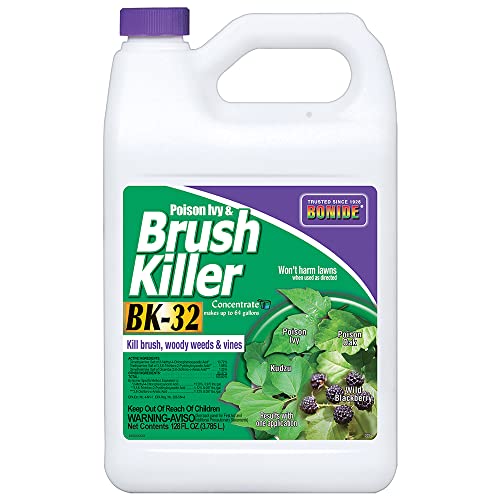
Bonide’s concentrate is designed to kill brush, woody weeds, and vines, including poison ivy and poison oak, with broad compatibility for garden borders and wooded edges. It also supports stump treatment for post-cut applications, making it a practical choice for clearing overgrown areas and stumps. The product is formulated to be safe for grasses when used as directed, helping to manage brush without harming lawns. Users should carefully follow dilution and application instructions to maximize effectiveness and minimize impact on nearby plants.
Nufarm 4-Speed XT Herbicide
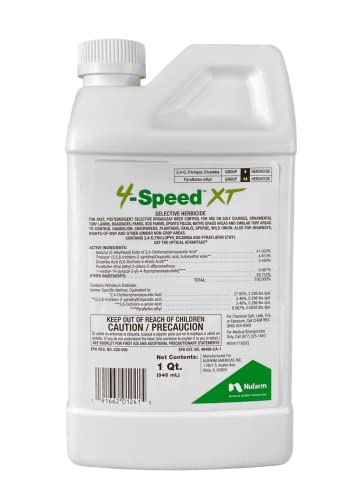
4-Speed XT provides rapid broadleaf weed control across residential and commercial settings, with visible results typically within 24 to 48 hours. It targets a wide variety of broadleaf weeds, including common ivy associates such as ground ivy and spurge, offering an effective option for larger lawns or landscaped areas. Suitable for use on multiple site types—golf courses, sod farms, athletic fields, and parks—this product supports integrated weed management programs while emphasizing swift action and broad spectrum coverage.
Buying Guide
Key purchase considerations help homeowners choose the right ivy herbicide for their property and safety requirements. These factors cover effectiveness, site-specific needs, and environmental and user safety.
- Active ingredients and spectrum: Post-emergent herbicides with triclopyr and 2,4-D are effective against woody plants and broadleaf weeds; vinegar-based products emphasize safety and rapid surface action but may require more frequent applications on tough weeds.
- Site and plant targets: Consider whether you are treating ivy in landscapes, driveways, or wooded edges. Concentrates can be cost-effective for large areas, while RTU formulas are convenient for spot treatments.
- Safety and pet/kid considerations: If household safety is a priority, look for pet- and child-safe labels or organic alternatives. Always follow label directions for protective clothing and application timing.
- Application timing: Some products work best during active growth, while others are suitable for dormant periods. Flexible timing can reduce missed treatments due to weather.
- Impact on non-target plants: Ensure the product is appropriate for lawns and garden beds, avoiding unintended damage to desired vegetation. Some products are explicitly safe for grass or designed for stump treatment after cutting.
- Spray coverage and dilution: For concentrates, calculate per-acre or per-square-foot coverage to avoid under- or over-application. Consider equipment compatibility and spray drift risk on nearby ornamentals.
- Environmental considerations: Choose environmentally responsible ingredients when possible, especially in areas with waterways, pollinators, or sensitive ecosystems.
- Cost and packaging: Weigh the upfront cost against long-term use across seasons. Larger containers may reduce cost per ounce, but require storage space and longer-term commitment.
When choosing a product, balance speed of results with safety, area size, and landscaping goals. For ivy removal near lawns or flower beds, selecting a label-appropriate option that minimizes lawn damage while delivering effective brush control yields the best long-term results. Consulting local extension services or product labels can help tailor the choice to climate and weed species common in American regions.