Best Bermuda Grass Length Tips for a Lush, Durable Lawn
Bermuda grass thrives when you tailor mowing height, fertilization, and overseeding to your climate and soil. This guide highlights top Bermuda-focused products and practical length strategies to keep your lawn dense, drought-tolerant, and green from season to season. Use these selections to choose seed, fertilizer, and overseeding options that align with your yard’s sun exposure and maintenance goals.
Summary of Selected Products
| Product | Brand | Key Focus | Amazon Link |
|---|---|---|---|
| O.M. Scott Bermudagrass Seed, Fertilizer & Soil Improver | Scotts | Dense establishment, drought tolerance | https://example.com |
| Scotts Turf Builder Bermudagrass Seed with Fertilizer | Scotts | Root-building nutrition, drought resistance | https://example.com |
| Scotts Turf Builder Rapid Grass Bermudagrass | Scotts | Fast seed-to-sod transition | https://example.com |
| Pennington Annual Ryegrass Overseed for Warm Seasons | Pennington | Winter color for warm-season lawns | https://example.com |
| Giant Bermuda Grass Seed (Coastal Bermuda Alternative) | Dibbs Farms | Dense pasture-like Bermuda alternative | https://example.com |
O.M. Scott Bermudagrass Seed, Fertilizer & Soil Improver

O.M. Scott & Sons Bermudagrass Grass Seed is designed for hot, dry Southern climates, delivering a 3-in-1 solution of seed, fertilizer, and soil improver. The product blends hand-selected Bermudagrass varieties grown in California with Natural Grass Food and a soil-improving clay. It aims to establish dense turf that can endure heat and drought once mature, making it suitable for areas with intense sun. The formulation contains no artificial or pest-control additives and is safe for use around people and pets when used as directed.
Scotts Turf Builder Bermudagrass with Fertilizer and Soil Improver
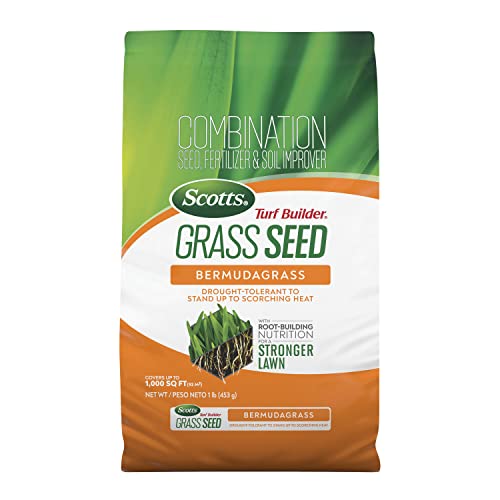
This redesigned Scotts Turf Builder Bermudagrass mix emphasizes drought tolerance and Root-Building Nutrition for a stronger lawn. Designed for full sun, it offers high drought resistance and durability. It is suitable for seeding a new lawn or overseeding an existing one, primarily in late spring or early summer when temperatures rise and water demand increases.
Scotts Turf Builder Rapid Grass Bermudagrass

Scotts Turf Builder Rapid Grass Bermudagrass combines seed and fertilizer for a faster establishment of full green turf. Marketed as a solution to overseed large problem areas or establish new lawns, this product uses a mix designed to deliver rapid germination and robust growth under proper care. It is best suited for sunny lawns where rapid fill-in is desired to minimize bare spots and improve overall density.
Pennington Annual Ryegrass Overseed for Warm Seasons

Pennington’s Annual Ryegrass is designed to overseed warm-season grasses, providing a green winter look when warm-season grasses go dormant. It performs best in areas with 6 to 8 hours of sun, offering quick color and cover within 3 to 7 days. While not Bermudagrass itself, ryegrass can help bridge seasonal gaps in color and density for lawns in transition between seasons.
Giant Bermuda Grass Seed (Coastal Bermuda Alternative)

Dibbs Farms’ Giant Bermuda Grass Seed offers a Coastal Bermuda Alternative with dense growth characteristics. Marketed for pasture and lawn use, this seed aims to establish a resilient, thick turf that can withstand heat and drought. It serves as an option for homeowners seeking a Bermuda-style lawn with strong density and endurance in hot climates.
Buying Guide: Bermuda Grass Length and Maintenance Considerations
Choosing the right Bermuda grass length involves balancing mowing height, climate, and turf class. For most warm-season lawns, Bermudagrass is commonly maintained at a mowing height of 1 to 2 inches during the peak growing season. Lower mowing can produce a finer, denser blade but may increase stress in extreme heat. Raised heights reduce water loss and can discourage weed emergence, particularly in transitional seasons.
Mowing frequency should align with growth rate. In hot, sunny periods, daily or every-other-day mowing may be necessary to prevent scalping and encourage uniform density. In cooler months, mowing can be reduced while still maintaining a healthy blade. Always use sharp mower blades to avoid tearing the grass, and avoid removing more than one-third of the blade height at a single mowing session.
Fertilization and soil conditioning play a critical role in length management. Bermuda grass generally responds well to nitrogen-rich programs, applied in moderate, frequent increments rather than large, infrequent dosages. A soil test helps tailor nutrient levels, especially regarding iron content for color and humic or kelp-based additives for stress resistance. Ensure proper watering practices to support growth at the desired height without encouraging disease or root issues.
Overseeding options can help maintain density during seasonal transitions. Pennington’s ryegrass overseed, for example, provides winter color for warm-season lawns, though it is not a substitute for Bermuda in summer. For permanent Bermudagrass improvement, consider products that blend seed with fertilizer and soil amendments, as these promote quicker establishment and stronger root systems, reducing the likelihood of patchy growth at lower mowing heights.
Soil preparation is another key factor. If your soil is clay-heavy or poor drainage, incorporating soil improvers and organic matter during initial seeding can enhance establishment length and overall turf health. In hot climates, providing adequate irrigation during establishment and early growth supports the grass reaching its target mowing height more efficiently.