Best Post Emergent Crabgrass Killers for Lawns and Turf: Quick, Effective Solutions
Choosing an effective post-emergent crabgrass killer helps restore turf vigor and keeps lawns weed-free. This guide highlights five leading products, detailing how they work, timing, coverage, and safety. Read on to compare active ingredients, residual control, and application flexibility to fit your lawn’s needs.
Summary Of Selected Products
| Product | Brand | Active Ingredient / Type | Key Benefit | Approximate Coverage |
|---|---|---|---|---|
| Drive XLR8 Crabgrass Killer | BASF | Quinclorac | Post-emergent broad weed control with rapid uptake | Up to 30 days residual |
| Halts Crabgrass & Grassy Weed Preventer | Scotts | Pre-emergent herbicide blend | Season-long prevention of crabgrass and grasses | Multiple applications yearly for prevention |
| Torocity Herbicide | Atticus | Mesotrione | Pre and post-emergent control, flexible timing | Broad-spectrum weed control |
| Agrisel Sulfentrazone 4F | Agrisel | Sulfentrazone | Pre- and post-emergent, broad-spectrum | Stops 100+ weeds |
| Scotts WeedEx Prevent with Halts | Scotts | Pre-emergent/Grassy weed preventer | Season-long crabgrass prevention | 5,000 sq ft coverage per bag |
BASF Drive XLR8 Crabgrass Killer For Lawn & Turf

The Drive XLR8 product uses quinclorac-based chemistry to deliver post-emergent control of crabgrass and other broadleaf weeds. Its water-based formulation supports rapid uptake and a residual window of up to about 30 days, helping reduce the frequency of applications. The product is designed to be rainfast quickly, enabling timely weed suppression after a rainfall. It targets a broad spectrum of common lawn weeds, including bindweed, dandelion, and clover, making it suitable for mixed weed pressures in residential turf. Application should align with label directions for turfgrass compatibility and safety.
Scotts Halts Crabgrass & Grassy Weed Preventer

This product is a pre-emergent weed killer designed to prevent crabgrass, foxtail, spurge, and other grasses from germinating in the lawn. It’s suitable for early spring application on dry turf or in fall for winter weed prevention. Its performance isn’t affected by light rain or other mild weather after application, allowing flexibility in scheduling. A key consideration is its preventative focus, so it should be applied before weed emergence rather than after weeds appear. It helps maintain weed-free turf over extended periods when used as part of a broader lawn care plan.
Atticus Torocity Herbicide (8oz)
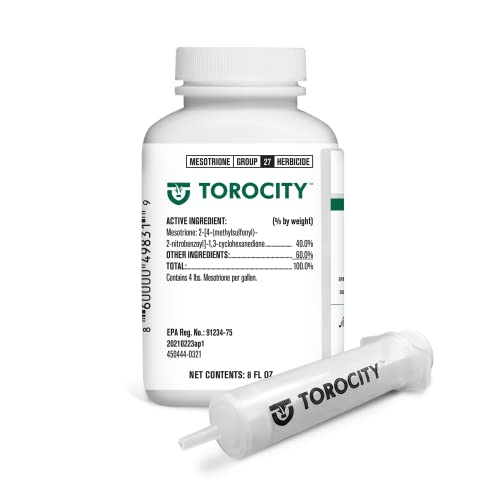
Torocity contains 40% mesotrione, the same active ingredient as Tenacity, offering trusted performance for weed control in both newly seeded and established turf. It provides timing flexibility with pre- and post-emergent activity, broadening the window for effective weed suppression. The product targets a wide range of weeds, including crabgrass, ground ivy, clover, oxalis, and dandelion. When using mesotrione-based products, adherence to label directions for turf species and application timing is essential to prevent damage to desirable grasses.
Agrisel Sulfentrazone 4F Weed Killer

Agrisel Sulfentrazone 4F is a versatile pre-emergent and post-emergent herbicide designed for broad-spectrum weed control. It targets weed seeds as they germinate and continues to provide control over established weeds. The 8-ounce bottle includes a protective glove set, underscoring safety considerations for handling and application. This formula is positioned for economical use with low application rates, suitable for both residential lawns and larger green spaces such as golf courses or public areas, making it adaptable to different scales of weed management.
Scotts WeedEx Prevent with Halts
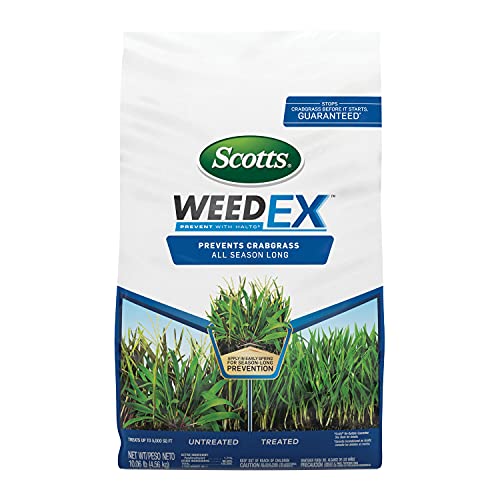
WeedEx Prevent with Halts combines pre-emergent crabgrass prevention with ongoing weed management to protect turf throughout the season. It is designed for early spring application to block germination and for fall use to curb winter weeds like Poa annua and chickweed. This dual-season strategy helps maintain lawn health and reduces the need for post-emergent treatments. Consider local climate patterns and lawn species to optimize timing and coverage for your area.
Buying Guide: Key Purchase Considerations And Comparisons
- Weed life cycle: Distinguish pre-emergent versus post-emergent products. Pre-emergents prevent germination; post-emergents kill existing weeds. Some products offer both capabilities, providing flexibility across seasons.
- Active ingredient profile: Quinclorac, mesotrione, and sulfentrazone have different weed targets and turf compatibility. Check your lawn’s grass species and any sensitive ornamentals nearby before application.
- Timing and weather: Post-emergent products often require active weed presence and may need follow-up applications. Rainfast times and irrigation requirements influence scheduling.
- Residual control: Some formulations offer extended residual control (up to ~30 days or more), reducing frequency of applications but requiring careful timing to avoid stressing new growth.
- Application scope: Consider yard size, target weed spectrum, and whether you need prevention for the upcoming season or immediate post-emergent control.
- Safety and handling: Many products include protective gloves or emphasize proper protective equipment. Always follow label directions and store out of reach of children and pets.
- Environmental impact: Evaluate the potential effects on nearby water sources and non-target plants. Choose products labeled for turf use and minimize drift risk during windy conditions.
- Price and coverage: Compare cost per square foot or per bag, especially for larger lawns. Pre-emergents often cover broader areas per bag, impacting long-term value.
- Grass compatibility: Some products are safer on warm-season grasses, others on cool-season species. Verify compatibility with your lawn type (fescue, bluegrass, bermudagrass, etc.).
When selecting a post-emergent crabgrass killer, align product choice with your lawn’s weed pressures, season, and maintenance plan. For instance, post-emergent options like quinclorac-based formulas work well when crabgrass is actively growing, whereas pre-emergent blends help prevent future germination. A combined strategy—using a pre-emergent for prevention and a post-emergent for hot spots—can offer comprehensive control. Always read the product label for specific usage guidelines, safety recommendations, and any turf restrictions before purchasing and applying.