Best Raised Bed Soil for Organic Veggie Gardens That Thrive
Choosing the right soil is essential for productive raised-bed gardening. This guide highlights top raised bed soils and mixes designed to improve drainage, moisture retention, and nutrient availability for vegetables, herbs, and ornamentals. Each option below is tailored for raised beds, containers, or expanded garden spaces, helping you build a thriving, low-maintenance growing environment.
| Product | Best For | Key Benefit |
|---|---|---|
| Espoma Organic Raised Bed Mix | Vegetables & Herbs | Organic blend with earthworm castings and mycorrhizae |
| Wakefield Biochar Blend | Soil Health & Water Retention | CarbonBoost biochar for robust roots and moisture retention |
| FoxFarm Raised Bed Planting Mix | All-Purpose Raised Beds | Earthworm castings and oyster shell for fertility and pH balance |
| Miracle-Gro Organic Raised Bed & Garden Soil | Organic Fertilization | Peat-free mix with immediate feeding for up to two months |
| True Organic Raised Bed Food | Herbs, Flowers, Veggies | Rich seabird guano and shell meals for steady nourishment |
All products are listed below with practical details to help you compare textures, nutrient sources, and suitability for different bed sizes and plant types. This overview aims to support objective, research-based decisions for American gardens.
Espoma Organic Raised Bed Mix Overview

Espoma’s raised bed mix is designed specifically for outdoor beds and containers. It blends natural, organic ingredients with earthworm castings, alfalfa meal, kelp meal, and feather meal to support plant growth. A Myco-Tone inoculation provides a proprietary blend of endo and ecto mycorrhizae to improve root health and nutrient uptake. This combination promotes a balanced soil ecosystem, which can benefit vegetable crops and leafy greens by enhancing soil structure and microbial activity over a growing season.
Wakefield Biochar Blend With CarbonBoost Technology

This soil mix emphasizes soil health through CarbonBoost technology and biochar. The premium biochar improves aeration and reduces compaction, while promoting microbial activity for robust root development. Its moisture-retentive formula aims to cut watering needs by up to half, making it suitable for vegetable beds, outdoor pots, or as topsoil in larger garden installations. It also includes a bio-active blend of mycorrhizae and plant probiotics to further enhance nutrient uptake and soil resilience for raised beds.
FoxFarm Raised Bed Planting Mix

FoxFarm’s raised bed mix is a ready-to-use formula designed for diverse crops. It features earthworm castings and oyster shell to improve fertility and calcium availability, supporting vegetables, herbs, fruits, and flowers in raised beds and containers. The blend is formulated to balance moisture retention with adequate drainage, helping roots access air and water consistently. Its convenient, no-mix preparation makes it accessible for gardeners of all levels, from novices to experienced growers.
Miracle-Gro Organic Raised Bed & Garden Soil
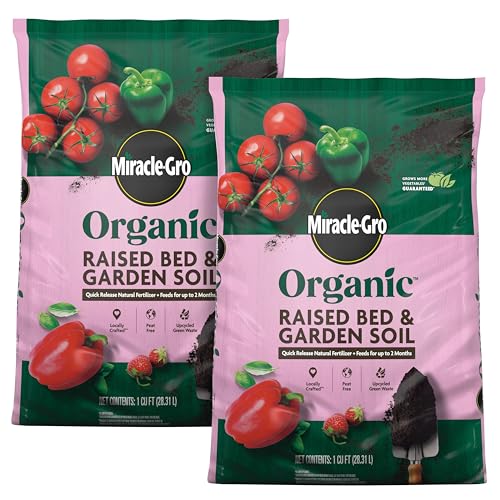
This 2-pack of Miracle-Gro Organic Raised Bed & Garden Soil combines organic-style blends with quick-release natural fertilizer. It feeds plants for up to two months, supporting sustained growth without a need for immediate supplemental feeding. The mix is peat-free and incorporates upcycled green waste, aligning with environmentally conscious gardening practices. It’s suitable for raised beds and large containers, helping maintain plant vigor and steady nutrient supply across a growing season.
True Organic Raised Bed Food

True Organic Raised Bed Food is engineered for raised beds and large containers, aiming to support robust growth across herbs, flowers, vegetables, and fruits. Its formula includes premium organic ingredients such as seabird guano, shrimp and crab shell meal, and other proven components that nourish soils while enriching organic matter. The product emphasizes consistent nourishment with an easy-to-use application schedule every two months during the growing season, fostering long-term plant health in variable American climates.
Buying Guide: Key Purchase Considerations
- Soil texture and drainage: Raised bed soils should balance moisture retention with excellent drainage. Look for blends containing perlite, vermiculite, or biochar to aid aeration and reduce waterlogging in heavy rains or compact soils.
- Nutrient source and release pattern: Quick-release fertilizers provide immediate feeding, while organic blends with mycorrhizae and beneficial microbes support long-term nutrient uptake. Consider your crop mix and whether you prefer slow-release or faster-acting nutrients.
- Soil pH and calcium balance: For vegetables like tomatoes, peppers, and leafy greens, calcium sources (such as oyster shell) can influence fruit quality and prevent disorders. Check if the mix includes calcium amendments or is pH-balanced for a typical home garden range.
- Organic vs. non-organic: Organic-certified mixes prioritize natural ingredients and reduced synthetic inputs. They are often preferable for edible gardens and those aiming for sustainable practices.
- Bed size and weight considerations: Raised bed soil can be heavy, especially in larger volumes. Choose a product that matches your bed dimensions and weight handling capabilities. Some blends come in bagged formats suitable for DIY builds, while others are marketed for quick-use in established beds.
- Container compatibility: If you’re growing in containers, ensure the mix is designed for container gardens to avoid compaction and drainage issues. Some blends emphasize moisture retention ideal for pots with shallower root systems.
- Long-term vs. short-term planning: If you want ongoing feeding without frequent amendments, selecting a soil with sustained-release nutrients or probiotic additions may be beneficial. For a multi-season project, a base soil that improves soil health over time is preferable.
- Price and availability: Bag sizes vary from 1.5 to 40 pounds or more. Compare total cost per square foot of garden space to determine the best value for your project, and consider long-term maintenance needs.
Bottom line: For raised garden beds, selecting a soil mix that emphasizes structure, drainage, and microbial activity yields healthier roots and more reliable harvests. The options listed here provide varied approaches—from organic blends with mycorrhizae to biochar-enhanced soils—so you can align your choice with your crops, climate, and gardening philosophy.