Best Rose and Flower Food for Stunning Blooms
Answering the question every rose gardener asks: which rose and flower foods deliver strong blooms and healthy plants with simple use? This guide highlights five top products, chosen for different garden needs—from organic options to all-in-one solutions with built-in disease control. Whether you’re growing hybrid tea roses, iris, azaleas, or lilacs, these selections help feed, protect, and promote vibrant growth. Below is a quick reference to help you pick the best option for your garden type and maintenance routine.
| Product | Best For | Protection | Notes |
|---|---|---|---|
| BioAdvanced 701100A 2 In 1 Rose Fertilizer | Large outdoor rose beds | Up to 8 weeks | Systemic insecticide included |
| BioAdvanced All-In-One Rose & Flower Care I | Low-maintenance care | Up to 6 weeks | Fertilizer, insect control, disease control |
| Scotts Rose & Bloom Continuous Release | Easy, steady feeding | Up to 2 months | Young plants and established beds |
| Miracle-Gro Water Soluble Rose Plant Food | Instant feeding | Immediate feeding when used | Fast-acting formula |
| BioAdvanced All-In-One Rose & Flower Care Fertilizer (4 lb) | Container or landscape shrubs | Up to 6 weeks | Three-in-one action |
BioAdvanced 701100A 2 In 1 Rose Fertilizer and Insect Killer
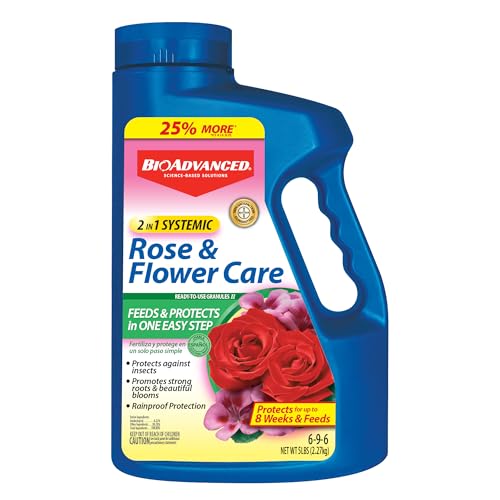
Best for: Rose beds that need both nutrition and insect protection in one step. This 2-in-1 formula feeds roses and flowers while delivering systemic insect killer action to guard against aphids, Japanese beetles, lace bugs, leafhoppers, whiteflies, and other listed pests. The up-to-eight-week protection makes it ideal for larger perennial borders where routine maintenance is challenging. Use this if you want fewer applications without sacrificing bloom quality.
Key points: The fertilizer nourishes roots for strong blooms, and the systemic insecticide travels through the plant to target pests. A limitation is that the product combines feeding and insect control, so if you only need disease control or fertilizer, a separate option may be more precise. Best for buyers seeking a single-step outdoor solution.
BioAdvanced All-In-One Rose and Flower Care I Granules

Best for: Gardeners seeking a straightforward, all-in-one approach. This granule-based formula combines plant fertilizer, insect control, and disease control with systemic rainproof protection lasting up to six weeks. This makes it well-suited for busy homeowners who want reliable broad-spectrum care for roses, irises, hibiscus, azaleas, camellias, rhododendrons, and other shrubs without multiple products.
Why selected: The triple-action design reduces guesswork and supports both flowering and plant health. Caution: It provides insect and disease control, which may be more than some small container gardeners require if pests are not a primary concern.
Scotts Rose & Bloom Continuous Release Plant Food

Best for: Gardeners who prefer steady, long-lasting nutrition. The continuous-release formula feeds for up to two months, promoting steady bloom development on roses, annuals, and perennials. It’s particularly suitable for established beds where consistent feeding supports ongoing flowering. Avoid if you need quick, immediate feeding or if you’re managing a very small, potted plant that needs frequent nutrition checks.
Miracle-Gro Water Soluble Rose Plant Food

Best for: Quick-response feeding for roses and flowering plants. This water-soluble formula starts feeding instantly and is designed for regular use every 7 to 14 days. It’s ideal when you want visible growth improvements across a short timeframe or for containers that require frequent adjustments. Limitation: Frequent application may be needed during peak growing season, which could require more effort than granular formulations.
BioAdvanced All-In-One Rose and Flower Care Fertilizer (4 lb)
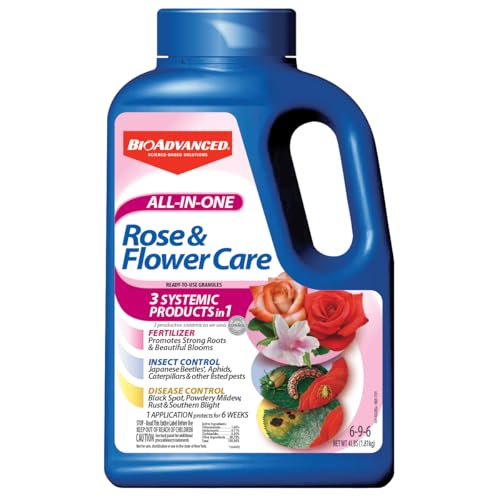
Best for: Landscape shrubs and mixed borders needing a robust, three-in-one solution. The 4 lb granules provide fertilizer, insect control, and disease control with systemic rainproof protection for up to six weeks. This option is suitable for larger beds or when you want comprehensive protection with one product. Caution: It’s a multi-action product; ensure it aligns with your pest and disease pressures before use.
Jobe’s Organics Granular Rose Fertilizer

Best for: Organic gardeners seeking a natural option. This 4 lb bag is OMRI-listed and free from synthetic chemicals. The 3-4-3 NPK feeds roses and flowering plants while aiming to minimize runoff and soil impact. Choose this if organic certification and minimal environmental impact are priorities. Limitation: Organic formulas may act more slowly than synthetic options, requiring patience for bloom results.
Down To Earth Organic Rose & Flower Mix

Best for: Certified organic gardens and ornamentals. This 5 lb mix offers a balanced 4-8-4 NPK, designed to support blooming and root development without synthetic additives. It’s a strong choice for organic beds where soil health and natural growth are prioritized. Caution: Availability may be region-dependent, and results can be slower compared to conventional fertilizers.
Fertilome Rose And Flower Food Plus Systemic

Best for: Those who want two products in one—rose and flower food with systemic insecticide. The formula includes Imidacloprid to carry the insecticide through the plant for pest protection for up to eight weeks. Suitable for larger plantings with pest pressure. Limitation: Some gardeners prefer to separate fertilizer and pest control for targeted use or to match pest seasons.
Buying Guide: Key Considerations For Rose And Flower Foods
- Type of care: Do you need fertilizer alone, or a combined insect and disease control? All-in-one solutions save time, while single-focus formulas offer precise management.
- Application method: Granules vs. water-soluble. Granules often require fewer applications, while water-soluble options provide rapid results but may need more frequent use.
- Protection duration: Some products protect for up to 6–8 weeks, others for 2 months. Align with your spraying schedule and local pest cycles.
- Organic vs. synthetic: Organic options support soil health and certifications but may work more slowly. Synthetic formulations can deliver quicker blooms but may impact soil life over time.
- Plant compatibility: Check NPK balance and recommended plant types. Some formulas target roses, azaleas, and flowering shrubs, while others are more general for mixed borders.
- Environmental impact: Consider runoff potential and listing (OMRI) for organic products if you garden with sustainability goals.
Frequently Asked Questions
- What is the best all-in-one rose food? A: All-in-one formulas that combine fertilizer, insect control, and disease control are convenient for busy gardens. They provide broad protection but verify that pest pressures align with the product’s targets.
- When should I fertilize roses? A: Most rose foods work best during the active growing season. Follow product directions for timing, typically feeding every 4–8 weeks based on the formulation.
- Is organic fertilizer enough to protect roses from pests? A: Organic fertilizers feed and support soil health, but for pest protection you may need an insect control product or a disease-control component, depending on pest pressure.
- Can I use multiple products together? A: It’s generally best to follow label instructions. Some products are designed to be used together, while others may cause compatibility issues or over-fertilization if used in combination.
- Are granular rose foods better than water-soluble options? A: Granular feeds provide slow, steady nourishment with less frequent applications, while water-soluble options offer quick results but require more frequent use.
- Should I choose organic or synthetic rose food? A: If you prioritize soil health and certifications, organic options are preferable. If you want rapid bloom response and simpler maintenance, synthetic options may be more suitable.