Best Solar Powered Greenhouse Watering System for Effortless Plant Care
Finding a solar powered greenhouse watering system means choosing a hands-free way to keep pots, beds, and shelves hydrated. This guide identifies five top options suited for greenhouses, balconies, and outdoor gardens. Each product targets different setups—small balconies, larger greenhouses, or travel-time plant care—so you can pick the best match for your space and plant variety. Below, you’ll see concise what-it-suits-for statements, followed by a quick comparison table to help you decide at a glance.
Quick comparison table (highlights)
| Product | Best For | Key Benefit | Limitations |
|---|---|---|---|
| AnseTo 12-Mode Solar Drip System | Up to 15 pots, vacation care | Split solar design protects electronics | Requires sun exposure for full effect |
| JIYANG 6-Timing Solar Kit | Balkonies and small gardens w/o faucet | Simple 6 modes, IP67 waterproof | Limited to 10 pots |
| Brightown 49FT Solar Drip Kit | Medium greenhouse and indoor windows | Long tubing, robust 49ft run | Plastic components may need checking |
| HEKIWAY 49–82FT Systems | Multi-pot setups, indoor/outdoor | 25 timer modes, buzzer alerts | More complex setup |
| GrowBuddy 12-Mode Kit | Raised beds and greenhouses | 12 modes, Type-C backup power | Limited to 15 pots |
AnseTo 12-Mode Solar Drip Irrigation System

The AnseTo system is designed for up to 15 pots with a 49-foot hose and a split solar design. Best for homeowners who want a dedicated vacation sitter that minimizes risk during trips. Its 12 customizable modes support precise root hydration for vegetables, succulents, and flowers, promoting water savings up to about 70% versus manual spraying. The anti-siphon valve helps prevent leaks when the system is not actively irrigating. A potential limitation is that sun exposure directly affects performance, so placement is important for reliability.
JIYANG Solar Automatic Drip Irrigation Kit

The JIYANG kit is ideal for balconies or small gardens without fixed power. It uses solar energy to water plants at preset intervals and amounts and includes an anti-siphon device. With IP67 waterproofing and a simple six-timer mode, it can be mounted indoors or outdoors. It works best for up to around 10 pots. A caveat is that the system relies on accessible sunlight and may require careful placement to maintain consistent watering when days are overcast.
Brightown Solar Drip Irrigation Kit (49FT)

Brightown’s kit provides a comprehensive 49-foot tubing layout with 15 adjustable emitters, designed for indoor or outdoor use. It offers a solar-powered, water-efficient solution with a 2200mAh panel for days of operation, even during cloudy periods. The LCD and a low-water alarm add reliability. Best for expanding water coverage in larger greenhouse corners or sunny window setups. A limit to consider is the potential need for regular maintenance to prevent emitter clogs in dusty environments.
HEKIWAY 49FT Solar Drip Irrigation Kit

HEKIWAY’s 49-foot system is designed for indoor/outdoor versatility with 25 timer modes and a 900ml/min flow rate. It supports year-round watering and features a smart alarm for pump or filter issues. It’s well-suited for mid-size greenhouse setups or balcony gardens. The user should note that the more extensive configuration may require a bit more setup time to optimize scheduling across multiple pots.
HEKIWAY 82FT Solar Drip Irrigation System

This version supports up to 30 pots with 82 feet of tubing and 25 timer modes. It’s best for larger greenhouse layouts or patio gardens requiring varied watering schedules across many containers. The Type-C charging option helps maintain operation during low sunlight periods. A potential limitation is the more complex setup and longer tubing network, which may require careful planning for even water distribution.
GrowBuddy Solar Automatic Drip Irrigation Kit
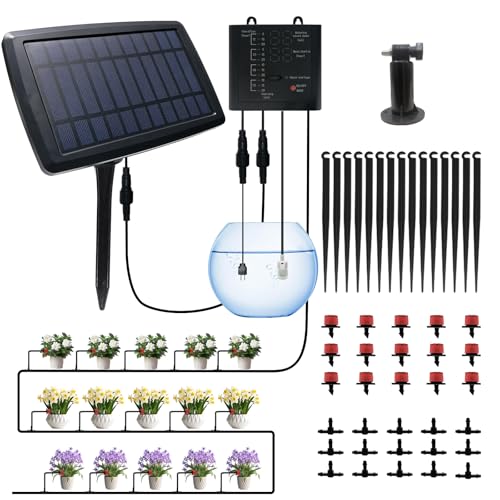
GrowBuddy offers 12 timer settings designed for hands-free plant care across 4–15 pots. It includes a solar panel plus Type-C backup power, enabling indoor and outdoor use. This kit is a solid choice for greenhouses or raised beds where you want reliable operation during variable sun. A note: ensure the 15 drippers align with plant spacing to avoid uneven watering in larger layouts.
Buying Guide
Key considerations when choosing a solar powered watering system for a greenhouse:
- Pot or bed capacity: Match the number of plants to the system’s pot count and tubing length. Choose a model that can scale to your current and near-future layout.
- Power source and reliability: Look for solar panels with adequate wattage and a backup option if available. Consider sun exposure in your setup (indirect light vs. direct sun).
- Timer complexity: More timer modes provide precise control but may require more setup time. Decide between easy presets and fully customizable schedules.
- Water flow control: Check maximum flow per minute or per emitter. Ensure the system can meet the water needs of varying plant types (vegetables, herbs, ornamentals).
- Ease of maintenance: Favor systems with built-in filters, alarms, and anti-siphon features to reduce leaks and clogs.
- Indoor vs. outdoor use: Ensure materials are weather resistant and rated for outdoor exposure if you plan greenhouse or balcony use year-round.
- Installation footprint: Confirm hose length, number of emitters, and mounting requirements fit your space without obstructing plant growth.
Frequently Asked Questions
- What plants benefit most from solar drip irrigation? – Vegetables, herbs, succulents, and flowering plants with similar water needs can benefit from evenly timed drip irrigation.
- Can solar irrigation work indoors? – Yes, with adequate sunlight exposure or backup power, many kits can operate indoors near sunny windows or with USB power.
- What maintenance is required? – Periodic cleaning of emitters and filters, checking tubing for leaks, and ensuring the solar panel stays clean and unobstructed.
- How to choose the right hose length? – Measure your planter spacing and total run length; longer runs reduce pressure and may require more emitters.
- Are these devices safe for pets or children? – They are generally low voltage and designed for outdoor or greenhouse use; keep electrical components away from water sources and supervise where appropriate.
- What is the typical water saving advantage? – Many systems claim significant reductions in water use by delivering precise irrigation, though actual savings depend on plant type and climate.