Best Weed Wacker Saw Blades for Fast, Clean Yard Work and Brush Clearing
When maintaining lawns and clearing brush, having the right weed wacker saw blade can dramatically improve cutting efficiency and blade longevity. This article highlights five top-fitting, carbide- or steel-tooth blades designed for straight-shaft trimmers. Each product is evaluated on fit, material, and cutting performance to help you choose with confidence for American lawns and gardens.
| Product | Brand | Arbor Fit | Teeth/Blade | Notes |
|---|---|---|---|---|
| 8″ x 80T Carbide Tip Blade (2 Pack) | ATIE | 1″ or 20 mm | 80 Teeth | Carbide tipped, long-lasting |
| 9″ x 20T Chain Saw Tooth Blade (2 Set) | CALPALMY | 1″ | 20 Teeth | Carbon steel, versatile |
| 9″ x 36T Carbide Tip Blade | Kurt-Saw | 1″ | 36 Teeth | Two-pack option |
| 9” x 20T Chainsaw Tooth Blade (NeJesZoe Kit) | NeJesZoe | 1″ or 20 mm | 20 Teeth | Universal adapters included |
| 9″ x 20T Carbide Tip Blade + 10″ Blade (Forester) | FORESTER | 1″ | 20 Teeth | Conversion kit sold separately |
The following selections emphasize compatibility with common straight-shaft trimmers, durability with tough vegetation, and ease of installation. Each entry includes a quick reference to the manufacturer’s features to help compare practical benefits at a glance.
ATIE 8″ x 80T Carbide Tip Blade Pack
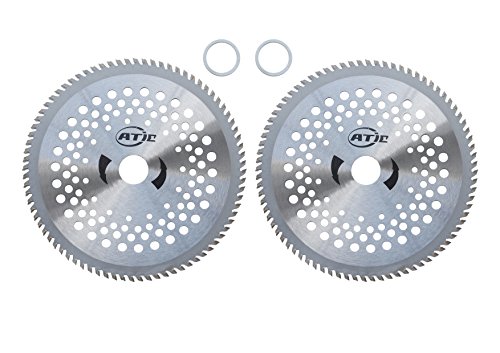
These 8″ blades are carbide tipped for extended life, designed to fit either a 1″ (25.4 mm) or 20 mm arbor, and feature 80 brazed-welded teeth. The carbide tip is advertised to last significantly longer than plain steel, making them a strong option for frequent brush clearing and tougher yard growth. They are built for users who need durable performance in a single blade that can handle varied vegetation without frequent replacement.
CALPALMY 9″ x 20T Chain Saw Tooth Blades (2 Set)

A two-pack option featuring 9″ chainsaw tooth blades with 20 teeth per blade, designed for straight-shaft trimmers with a 1″ arbor and up to 10,000 RPM. Made from carbon steel, these blades emphasize durability and lifecycle improvements—promising longer use per blade than standard trimmer blades. They are described as capable of clean cuts through brush and grass with reduced hand fatigue during heavy-duty trimming.
Kurt-Saw 9″ x 36T Carbide Tipped Blades (2 Pack)

This product offers a two-pack of relatively dense 36-tooth blades with carbide tips, designed for brush cutting and weed trimming. The carbide tips are intended to provide sharper cuts and longer blade life, especially for heavier weeds and brush. They are promoted as easy to install and capable of handling demanding yard tasks with less effort than standard steel blades.
NeJesZoe 9” x 20T Chainsaw Tooth Blade With Adapters
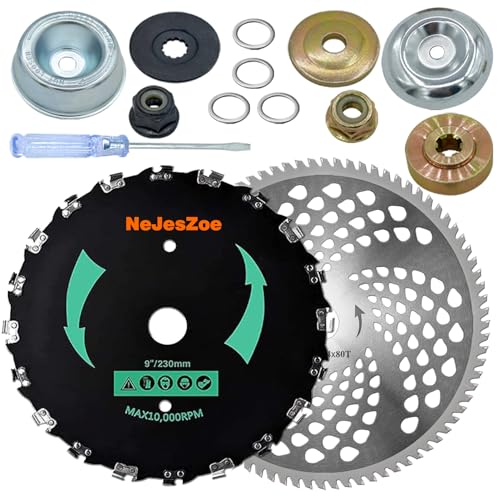
This kit includes 9″ chainsaw tooth blades and 10″ blades with universal adapters suitable for 1″ or 20 mm arbors. The set comes with multiple washers and rider plates, which can simplify mounting on various trimmer brands. It stresses a combination of durability and adapter versatility, making it a flexible choice for households with multiple trimmer models and occasional heavy-duty pruning tasks.
FORESTER 9″ x 20T Brush Cutter Blade + Optional Conversion Kit

Forester’s 9″ blade with 20 teeth aims at heavy-duty brush cutting. It fits most straight-shaft trimmers with a 1″ arbor and notes that a separate conversion kit may be required for certain trimmer configurations. The design targets saplings and thick weeds, offering aggressive cutting performance for larger yard clearing tasks.
Buying Guide: Key Considerations For Choosing Weed Eater Blades
- Arbor compatibility: Confirm your trimmer’s arbor size (commonly 1″ or 20 mm). Using the wrong arbor size can lead to mounting issues or unsafe operation.
- Blade material: Carbide-tipped blades typically last longer and stay sharper longer than plain carbon steel, especially when cutting through woody brush.
- Teeth count and blade width: More teeth usually yield smoother cuts but may reduce cutting speed; fewer teeth cut faster through light weeds but may struggle with dense brush. Balance with your typical yard tasks.
- RPM compatibility: Ensure the blade is rated for the maximum RPM of your trimmer. Exceeding RPM limits can cause blade failure or safety hazards.
- Adapters and kits: Some blades require adapters or conversion kits for proper installation on specific trimmer brands. Check compatibility with Stihl, Ego, Oregon, Husqvarna, Hitachi, and others.
- Intended use: Heavier brush, saplings, and woody weeds demand stronger blades (carbide tipped). Lighter grass edges benefit from slimmer blades for precision.
- Maintenance: Regular inspection for burrs, cracks, or worn carbide tips helps maintain safety and efficiency. Replace blades showing signs of damage.
- Safety considerations: Always wear eye protection, gloves, and sturdy footwear. Ensure trimmer is powered off and cooled before changing blades.
Across these options, buyers tend to prioritize longevity and compatibility with existing tools. While carbide-tipped blades deliver longer service life in tough brush, plain carbon steel blades can offer cost-effective performance for light trimming. For households with multiple trimmers, kits that include adapters can simplify installation and expand blade compatibility.